Faster response times.
If vessel delays, port congestion, or fuel cost spikes affect a shipment, brands with inventory already staged in the U.S. can continue supplying retailers without waiting on another overseas shipment to arrive.


If you're anywhere in the confectionery and snack supply chain in 2026, shipping disruptions aren't abstract concerns. They're showing up on invoices.
For brands still shipping finished, packaged goods across oceans, the costs are adding up faster than most realize. Tariffs calculated on full product value. Freight rates inflated by longer routes and rising fuel costs. Retail compliance requirements that often mean relabeling or repackaging on arrival anyway.
There is a better way to structure it. And it starts before the product is ever packed.
The Shipping Environment Has Changed
The global shipping routes that brands have relied on for decades are under sustained pressure, and not temporarily.
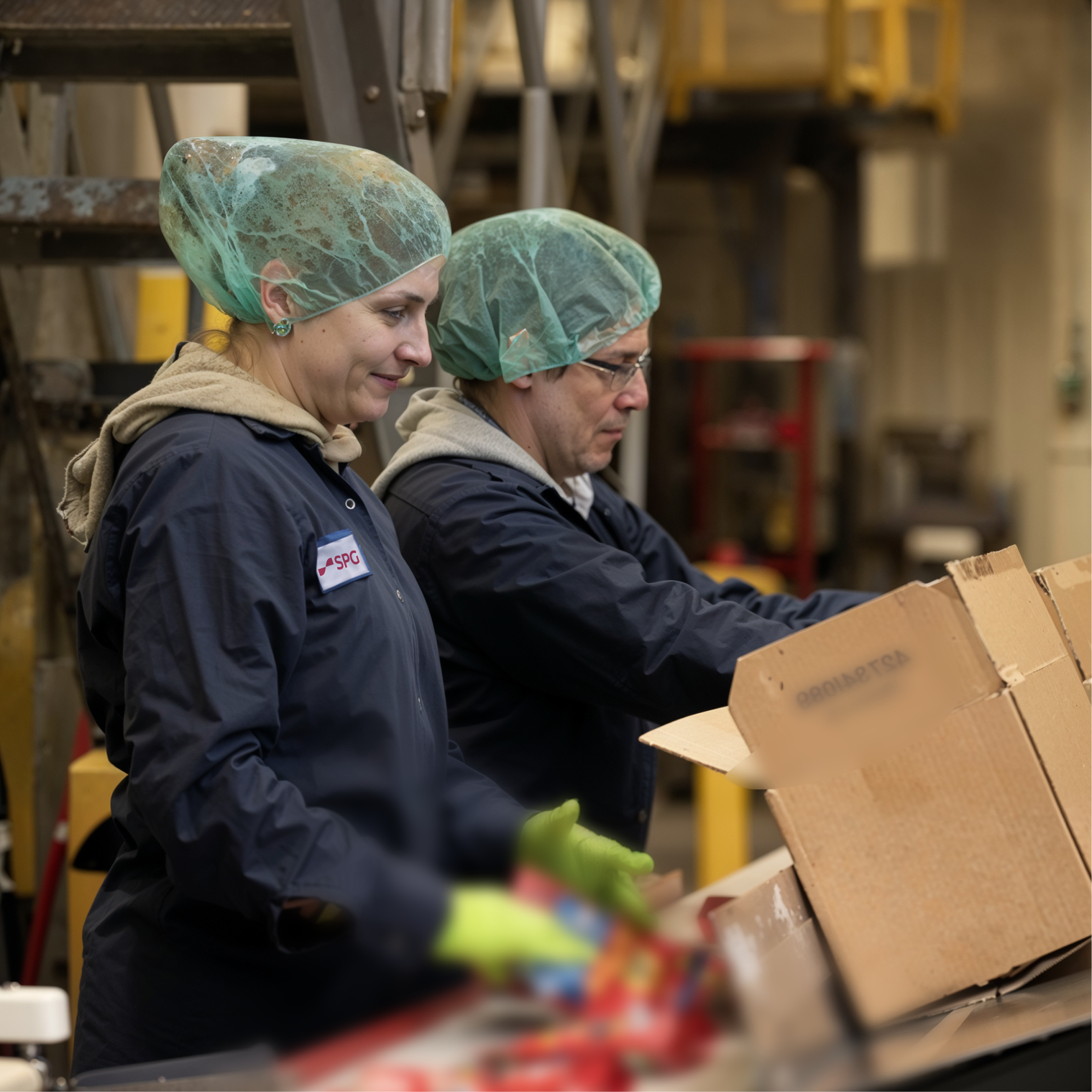
The Strait of Hormuz, which carries roughly 20% of the world's oil and LNG, has faced ongoing disruption, pushing fuel costs higher across every trade lane. The Red Sea, once a routine corridor between Asia and Europe, has seen repeated security incidents forcing vessels to reroute around the Cape of Good Hope, adding weeks to transit times and significantly increasing fuel consumption per voyage. Port congestion at major hubs in Europe, Asia, and the U.S. East Coast has gone from episodic to structural. And when vessels reroute, the ripple effects spread across the entire network: equipment imbalances, container shortages, and schedule unreliability.
The result is higher freight rates, longer lead times, and a level of variability in arrival schedules that makes tight inventory planning extremely difficult.
For brands shipping finished goods, every one of those variables is a risk with nowhere to absorb it.
The Tariff Reality
Layered on top of the shipping environment is a tariff structure that heavily penalizes finished goods.
When you ship finished, packaged goods into the United States, tariffs are calculated on the full declared value, packaging, labor, and all. When you ship bulk ingredients and complete the packing process inside the U.S., tariffs apply only to the raw material value.
On a full container, that difference isn't a rounding error. It can be the margin.
Finished Goods vs. Bulk: Why the Distinction Matters More Than Ever
A container of finished, packaged product is locked before it leaves the factory. The SKU mix, the pack sizes, the labeling, all of it is fixed based on a forecast made weeks or months earlier. If that forecast is off, or if the shipment arrives late, there is very little room to maneuver.
Bulk product works differently, and that difference becomes decisive during disruptions.

Faster response times.
If vessel delays, port congestion, or fuel cost spikes affect a shipment, brands with inventory already staged in the U.S. can continue supplying retailers without waiting on another overseas shipment to arrive.

Reduced forecasting risk.
A brand may know it has retailer demand but not the exact mix yet. How many 5-count packs versus 10-count packs, for example. Shipping bulk first allows the final packaging configuration to be decided based on actual demand, not early estimates.

Better container efficiency.
Bulk product is dense. Finished retail packaging, boxes, pouches, trays, is full of air and structure designed for the shopper, not the shipping container. Fewer containers means lower freight exposure across the board.
Greater resilience during disruptions.
When global shipping lanes face sudden restrictions or closures, brands with U.S.-based co-packing can continue final assembly, packaging, and distribution domestically. They are not dependent on a finished-goods shipment arriving on time from the other side of the world.
The advantage goes beyond tariffs. It is about agility, inventory positioning, and reducing vulnerability to a shipping environment that is no longer predictable.
The U.S. Co-Packing Advantage
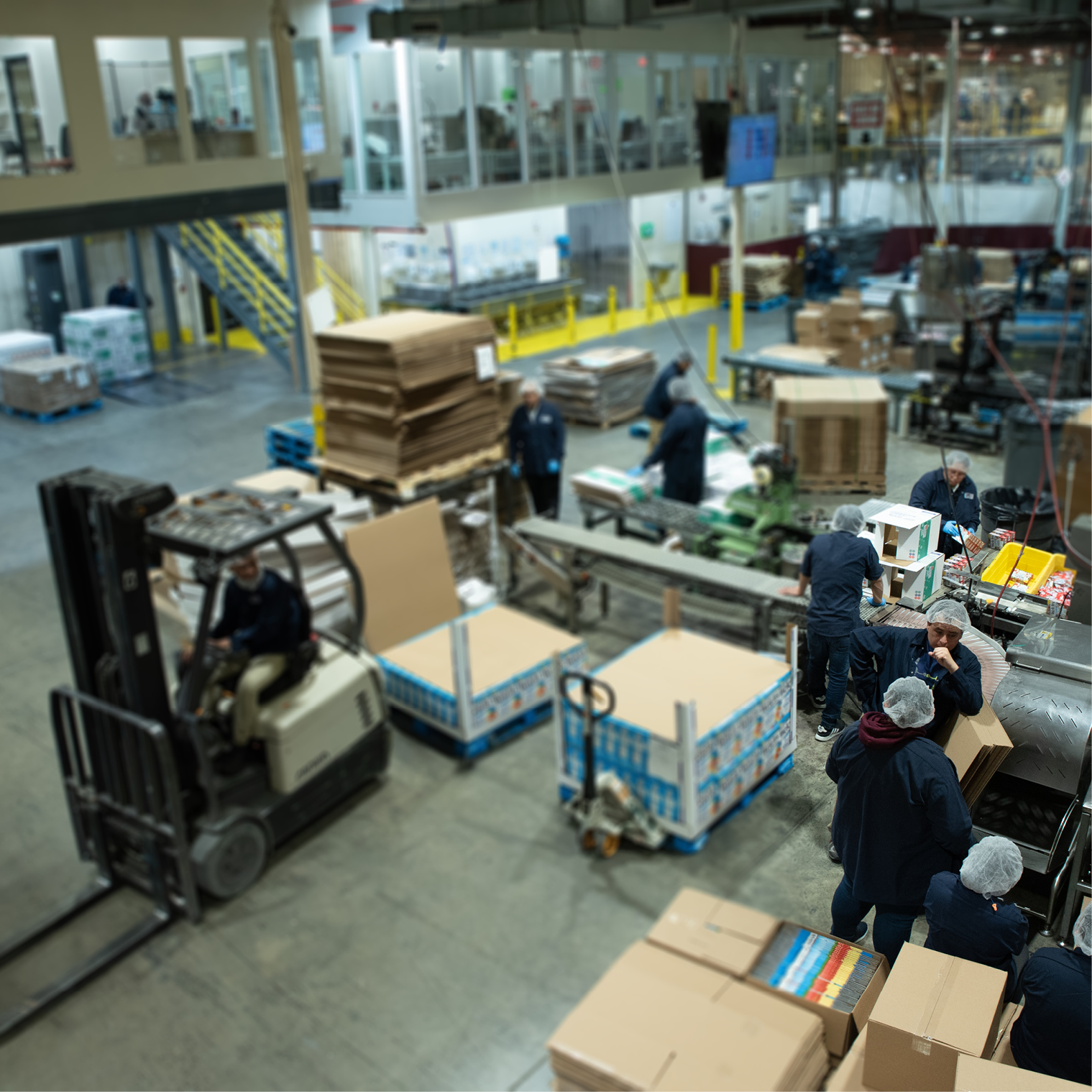
Shipping bulk to a U.S. co-packing partner means compliance, labeling, retailer-specific formats, and fulfillment all happen close to the market and close to the customer. When an order spikes, when a retailer's requirements shift, or when a shipping lane closes without warning, the response time is days, not weeks waiting for a container.
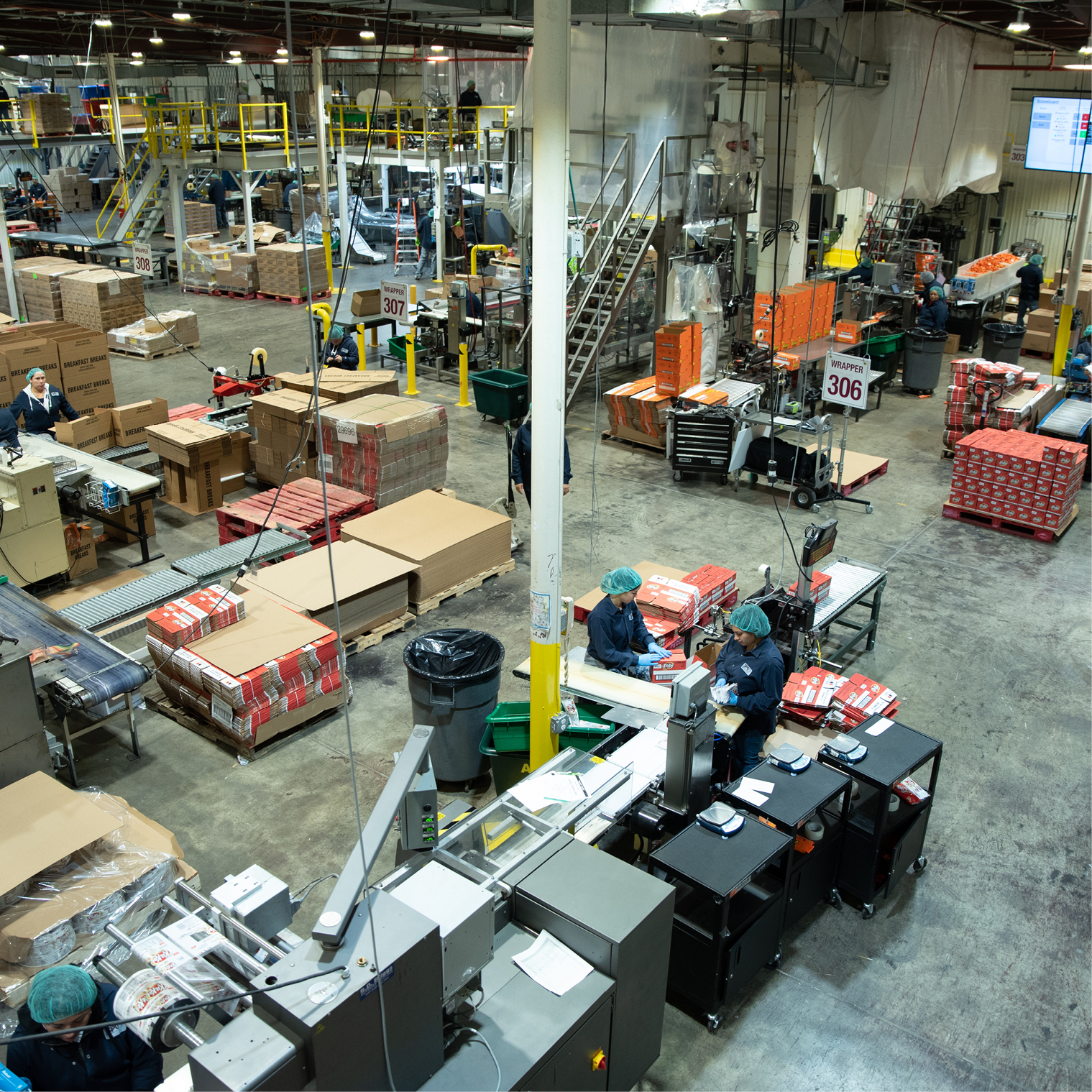
Since 1995, Superior Pack Group has been the co-packing partner global brands trust when entering and operating in the U.S. market. With 250,000 square feet of facility space, 196 machines, and 150 million pouch capacity monthly, SPG is built to handle volume and to absorb the supply chain complexity that today's global environment demands.
The math on finished goods vs. bulk has changed. SPG can help you run the numbers.