

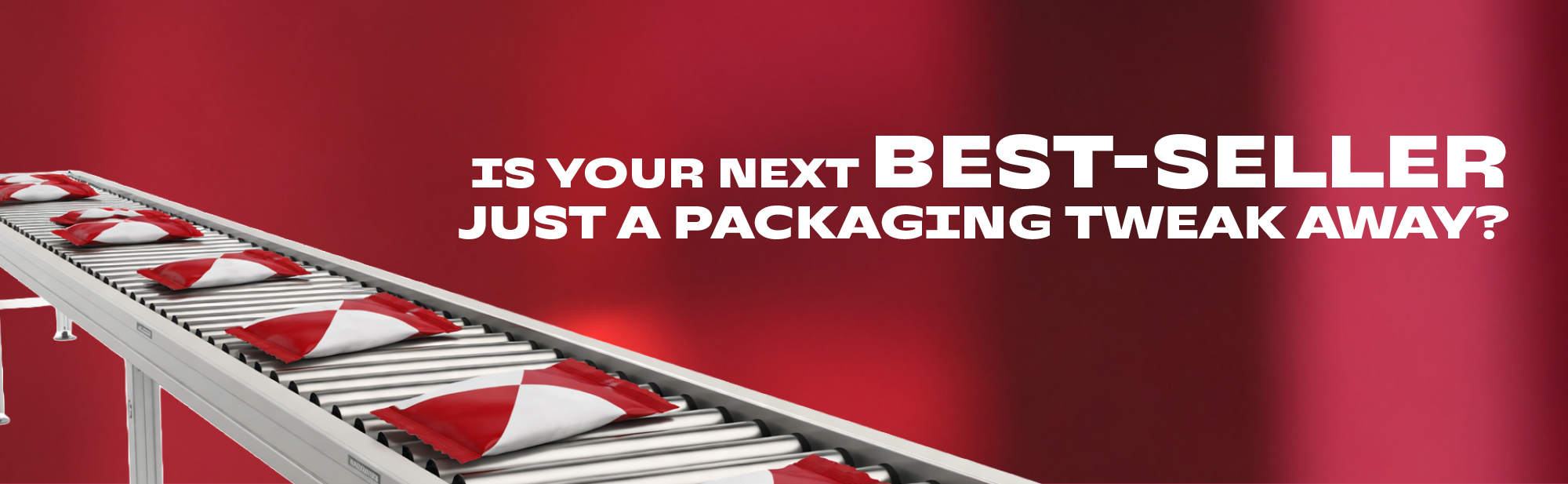
A co-packer gives brands room to try new sizes, packs, and channels without building a new line for every idea.
In 1968, Mars took candy bars people already loved, made them smaller, wrapped them individually, and called them "Fun Size." The recipe stayed the same. What changed was a format made for handing out on Halloween, and it became so tied to trick-or-treating that it's hard to picture October without it.
Today, Halloween accounts for roughly 18% of U.S. confectionery sales.
A new format can reach customers the original package never could.
Mars had the equipment to try it. Most growing brands don't.
Shoppers don't buy candy in just one place
Most consumers buy confectionery in three to four different retail channels. Each channel has its own idea of what a package should look like:
larger bags, bundled multipacks, and pallet-ready programs
small single-serve sizes built for impulse buys
packs sized to land on a specific price
your core size, on pegs or in cartons
Valentine's Day, Easter, Halloween, and the winter holidays drove 63% of U.S. confectionery sales in 2025
A brand that can only run one format has effectively chosen one aisle.
When the machines decide what you sell
Whether you pack in-house or with a co-manufacturer, someone's equipment sets your limits.
In-House Operations
In-house, a new bag size can mean new tooling. A carton or display program can mean a whole new machine, plus floor space, operators, and changeover time. And you may only have that ONE run set up.
With a Co-Manufacturer
With a co-manufacturer, packing is usually built around making the product. Their packaging lines may only run one or two formats. A new size or a bigger club order can exceed what their equipment can handle.
Either way, the club buyer waits. The seasonal idea gets pushed to next year. The convenience pack never happens.
The product is ready. The line isn't.
What changes with a co-packer
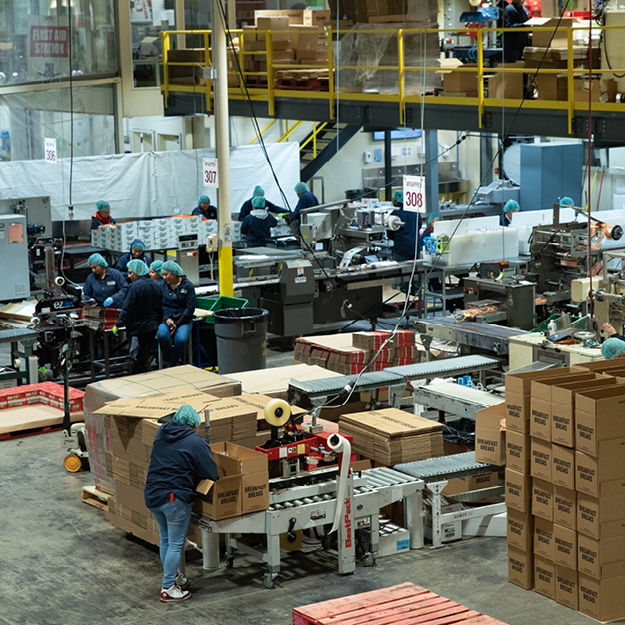
A co-packer built for variety gives you room to experiment. Want to test a 2-ounce pack, a club bundle, or a seasonal box? The equipment is already running, so trying something new doesn't mean buying something new.
At SPG, that range is already on the floor:
- Stand-up pouches and form-fill-seal bags in a wide range of sizes
- Carton packing, including theater boxes
- Flow wrapping
- Tub, bottle, and canister filling
- Shrink wrapping and bundling for club multipacks
- Variety packs, gift trays, PDQ displays, and club store pallet programs
Costco, Walmart, and Walgreens Approved
Brands can ship bulk product to SPG and have it packed into the formats each channel calls for. SPG is approved by Costco, Walmart, and Walgreens, and its team knows the requirements each retailer brings, right down to how the pallet is built.
Find your “Fun Size” moment
Not every new format will be a hit. But a brand that can try a smaller pack this quarter and a holiday box the next gets more chances to find the one that takes off.
Room to Keep Evolving
Your product can stay exactly what it is. With the right partner, its package gets room to keep evolving until something clicks.
Since 1995, SPG (Superior Pack Group) has led the co-packing industry with a focus on efficiency, food safety, packaging innovation, and value-added partnerships. Their approach ensures candy and other products reach the shelf quickly without compromising on quality. Learn more at superiorpackgroup.com or contact the team at sales@superiorpackgroup.com / (845) 534-1015.